What’s a KPI and How to Choose Yours
Published on: January 5th, 2026
Introduction: Metrics vs KPIs
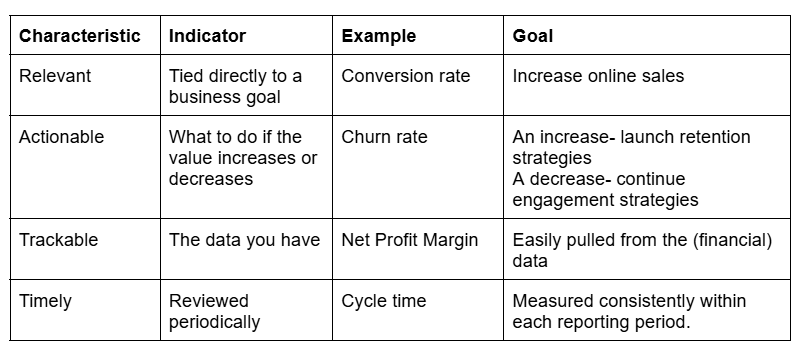
Not every number is a KPI. A Key Performance Indicator (KPI) is a number that tracks performance, indicating progress towards crucial goals over time.
A good KPI must have the following characteristics:
Case Study: Bessie Chooses Her KPIs
Before
Bessie tracks:
Total sales
Number of orders
Instagram followers
But she feels stuck.
After
She narrows it down to 5 KPIs:
Monthly Revenue
Average Order Value
Repeat Customer Rate
Top Product by Profit
Inventory Turnover
Why this works
Each KPI answers a clear question and triggers action.
KPI Examples by Business Type
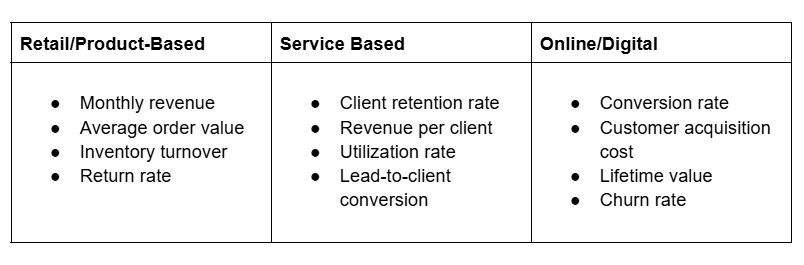
How to Choose Your Own KPIs
Here is a practical example of how to choose your KPI:
Step 1: Identify one 1 business goal. For this purpose, let’s use “Increase profit”.
Step 2: Ask crucial questions to serve as a guide. For example, how can I identify improvement?
Step 3: Choose 1–2 KPIs per goal. Try to limit it to 5 to avoid overwhelm. Remember, if you can’t take action on it, it is not a KPI.
Common KPI Mistakes to Avoid
Tracking too many KPIs
Tracking vanity metrics (likes, followers)
Never reviewing KPIs
Tracking KPIs without targets
Click on the button below to read earlier posts with more examples
Wrap-Up: Your KPI Starter Set
“You don’t need dashboards full of numbers. The most important requirement for creating a KPI is accountability. ”
Remember:
Start small
Review weekly or monthly
Adjust the KPIs as the business grows
